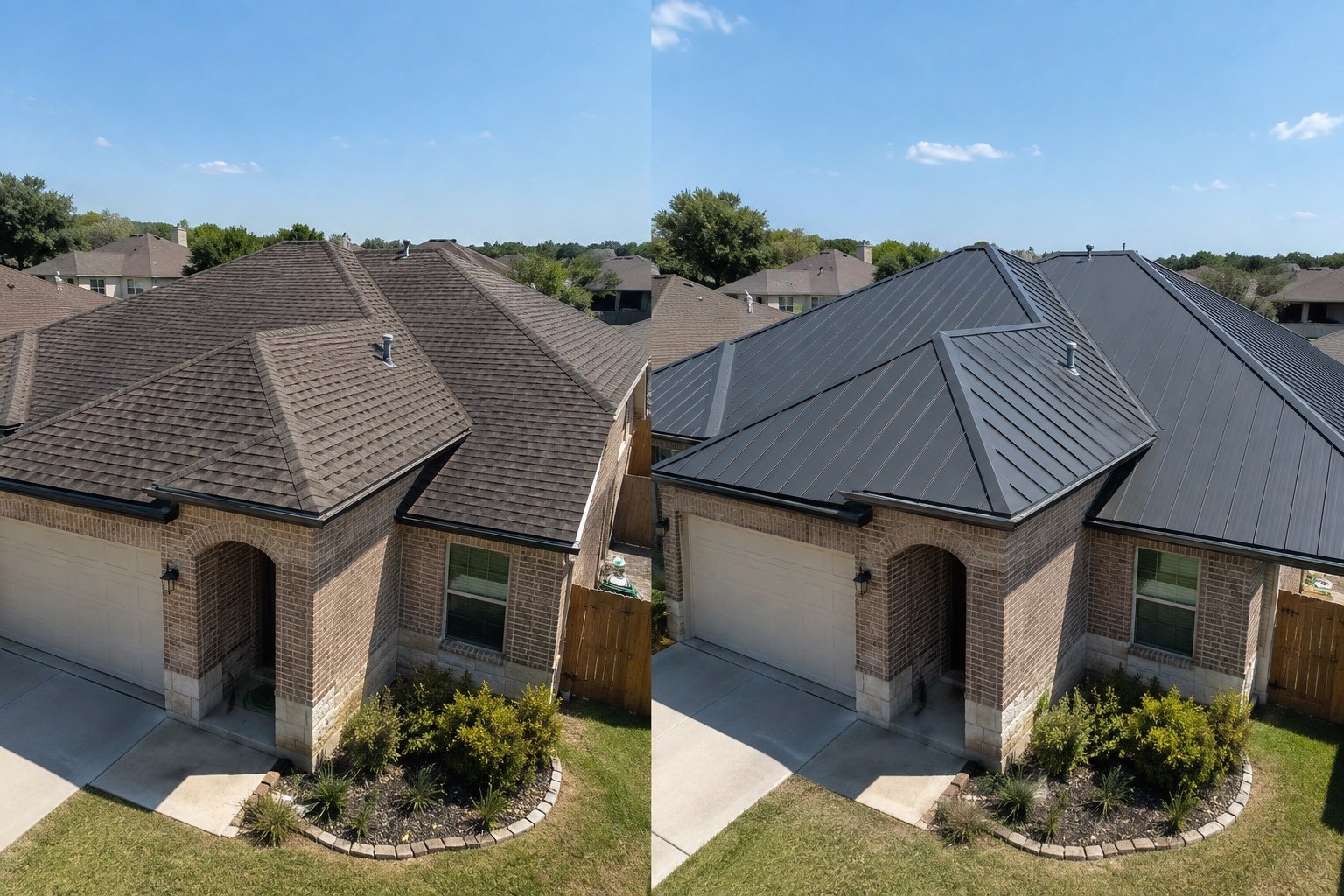
Metal roofing built for the Valley, not for a brochure
Gulf humidity, 100° summers, hail, and hurricane season. Standing seam metal handles all four better than anything else we install — and it’ll likely be the last roof you ever buy for this house.
Free Inspections
Photos and a written assessment, no charge
Licensed & Insured
Fully licensed, bonded, and insured
Financing Available
Flexible payment plans on approved credit
Workmanship Warranty
Our labor is guaranteed in writing
Four Valley problems metal solves at once
The Rio Grande Valley is genuinely hard on roofs. Asphalt shingles were designed for a milder climate than ours, and they show it.
Heat. Our summers cook asphalt. Shingles absorb solar heat, push it into your attic, and degrade faster for it. Metal reflects a large share of that radiant heat back off the roof entirely, which shows up on your electric bill.
Humidity. Gulf moisture feeds algae and accelerates the breakdown of organic roofing materials. Metal doesn’t rot, doesn’t host algae, and doesn’t absorb water.
Hail. Impact-rated metal panels dent under severe hail; asphalt shingles bruise, lose granules, and fail. One is cosmetic, the other ends the roof.
Wind. Standing seam systems with concealed clips carry the highest wind ratings we install. When a named storm comes up the Gulf, that rating is the difference between an inconvenience and a claim.
Three ways to do a metal roof
They are not interchangeable. The right one depends on your roof, your budget, and how visible the roof is from the street.
Standing Seam
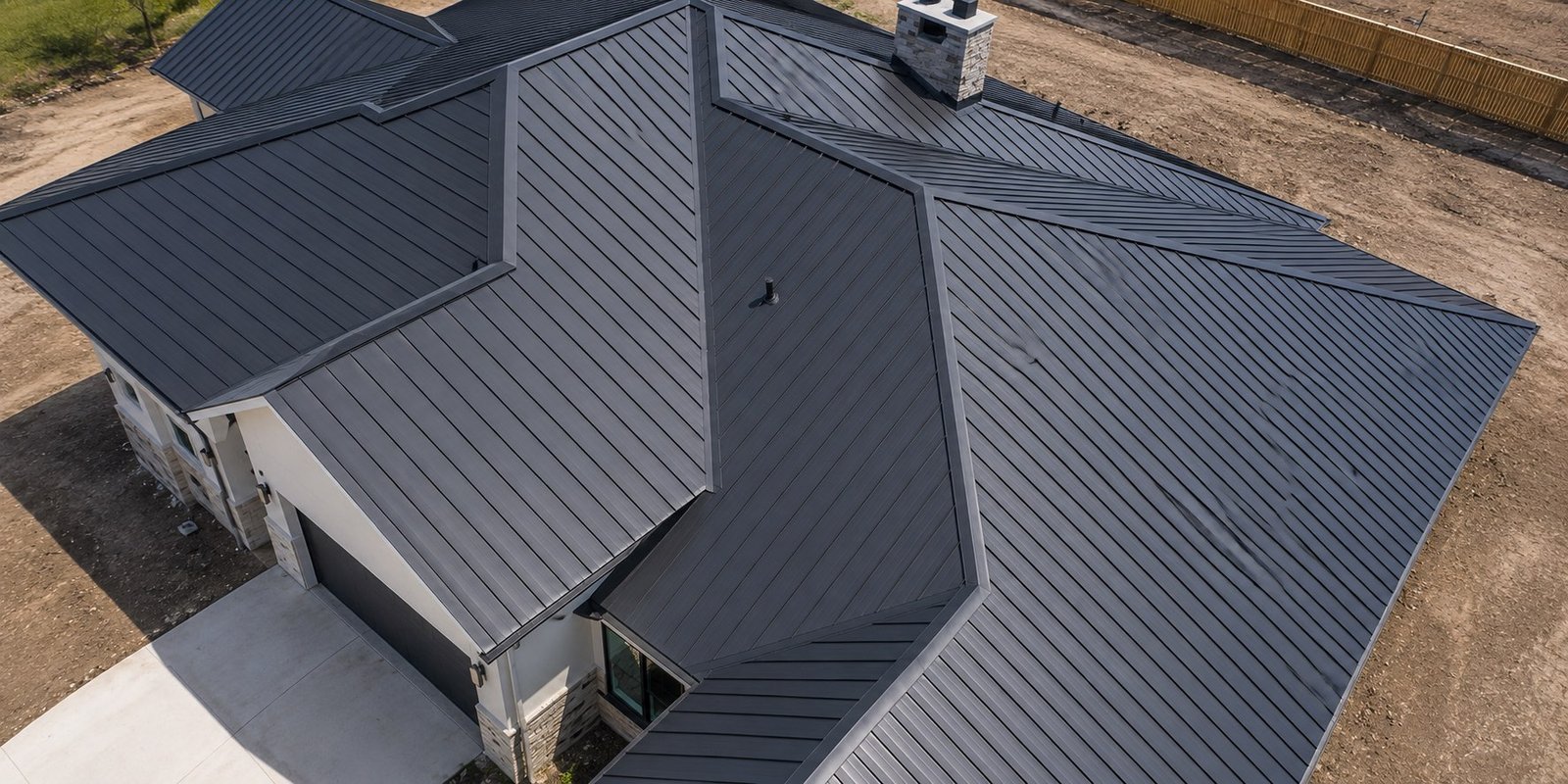
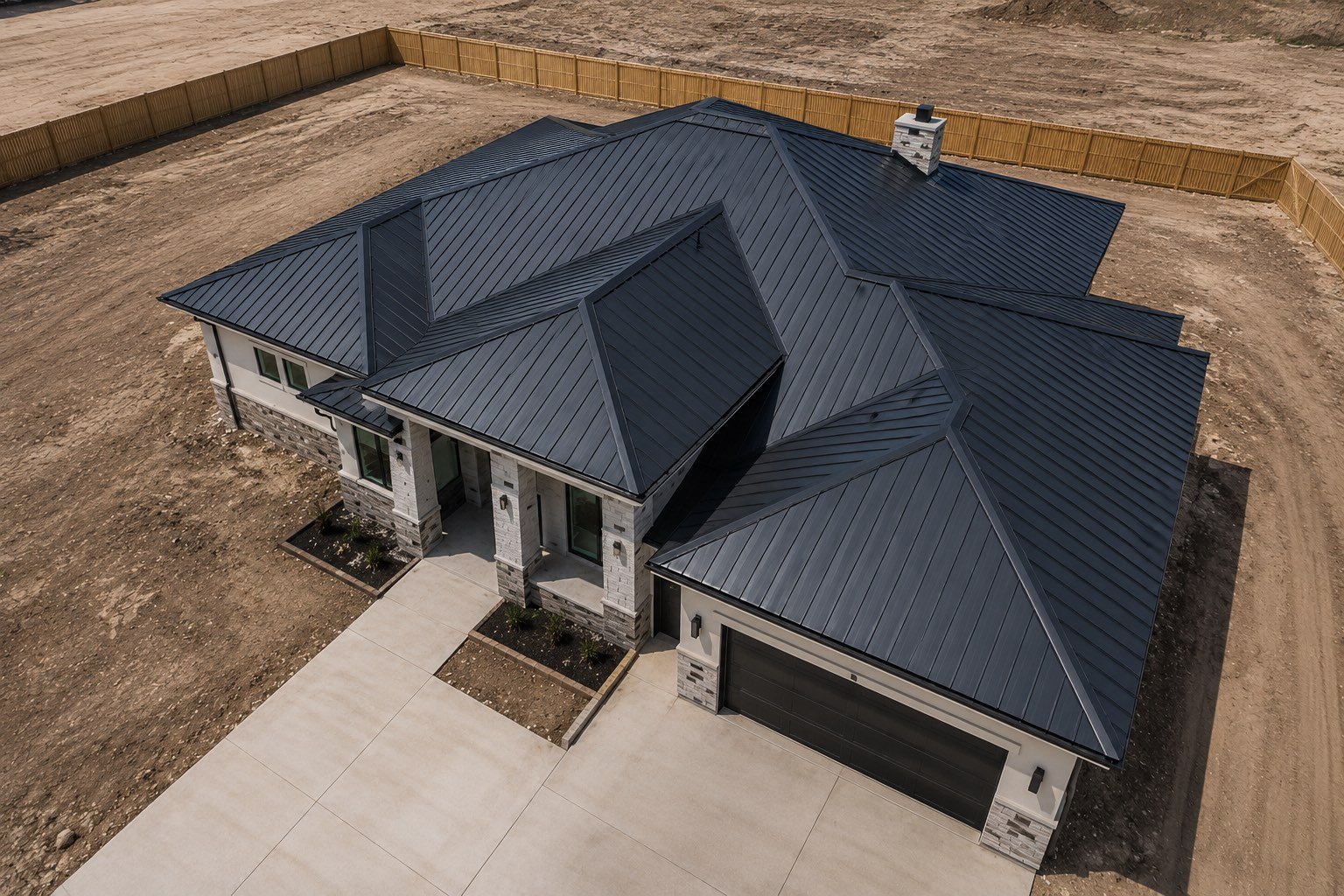
Vertical panels joined by raised seams, with every fastener hidden underneath. Nothing penetrates the surface of the roof, which is why it lasts.
- No exposed fasteners to fail
- Highest wind ratings available
- Clean architectural appearance
- 40–70 year service life
Exposed Fastener (R-Panel)
Screwed through the face of the panel. Considerably cheaper and faster to install, and a solid choice on outbuildings, barns, and workshops.
- Lower cost per square foot
- Fast installation
- Gaskets need replacing over time
- 25–40 year service life
Metal Tile & Shake
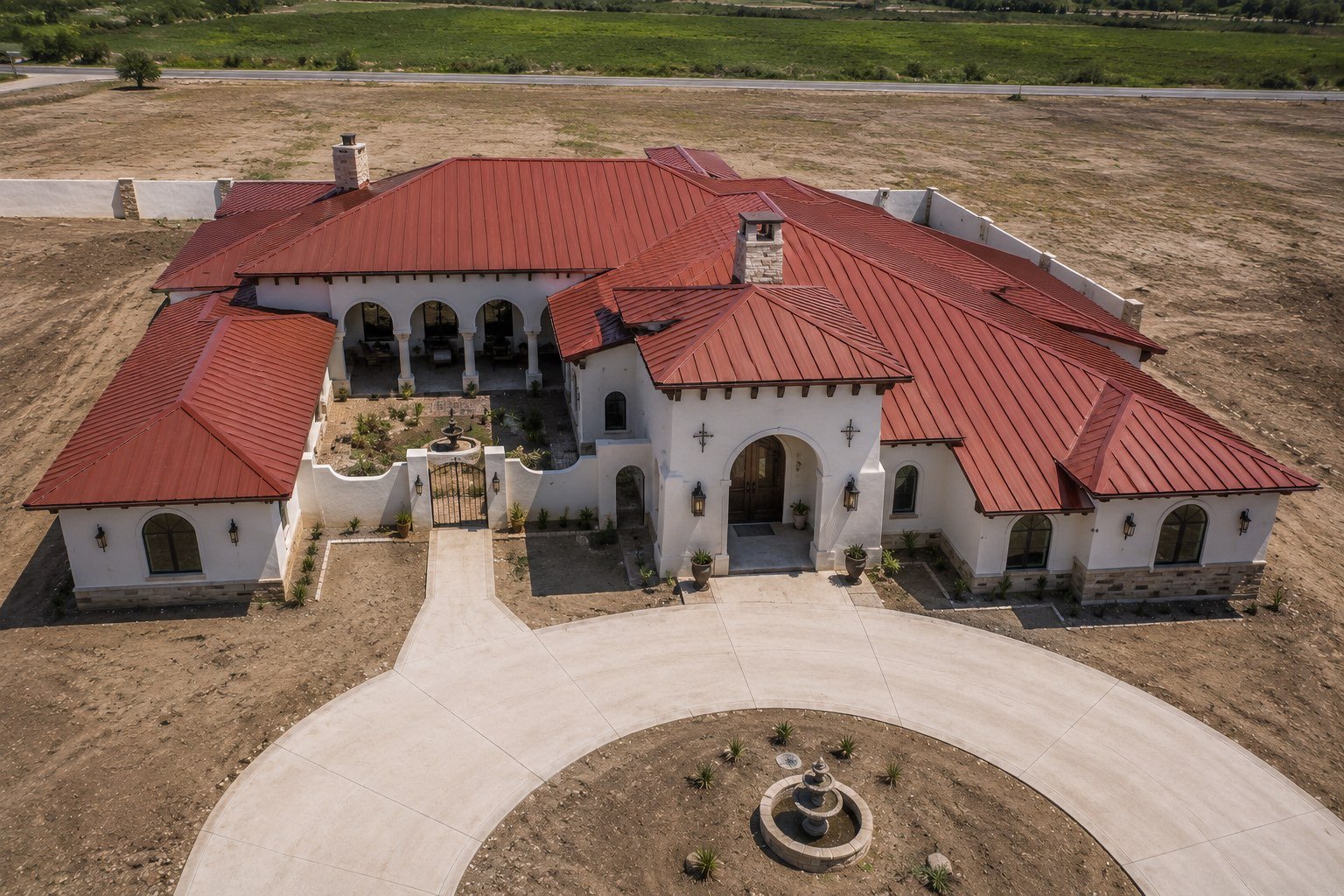
Stamped metal panels that read as clay tile or wood shake from the street, at a fraction of the weight. Popular on Spanish-style Valley homes.
- Tile look without the weight
- No structural reinforcement needed
- Wide range of profiles and colors
- 40–60 year service life
Metal costs more. Here’s when it’s worth it.
We’d rather you run the numbers than take our word for it.
Metal makes sense if…
- You plan to stay in the home 15+ years
- You’re building new and can spec it from the start
- Your electric bills in summer are painful
- You’ve replaced a shingle roof here before and don’t want to again
- Your home’s architecture suits the look
- You want the strongest wind rating available
Shingle may be the better call if…
- You’re likely to sell within 5–7 years
- Your budget is genuinely tight right now
- An HOA restricts roofing materials
- The roof has unusually complex geometry driving labor up
- Your neighborhood is entirely shingle and resale matters
We install both, so we don’t care which you pick
There’s no version of this where we make more money steering you toward metal. Tell us your timeline and your budget and we’ll tell you which one we’d put on our own house.
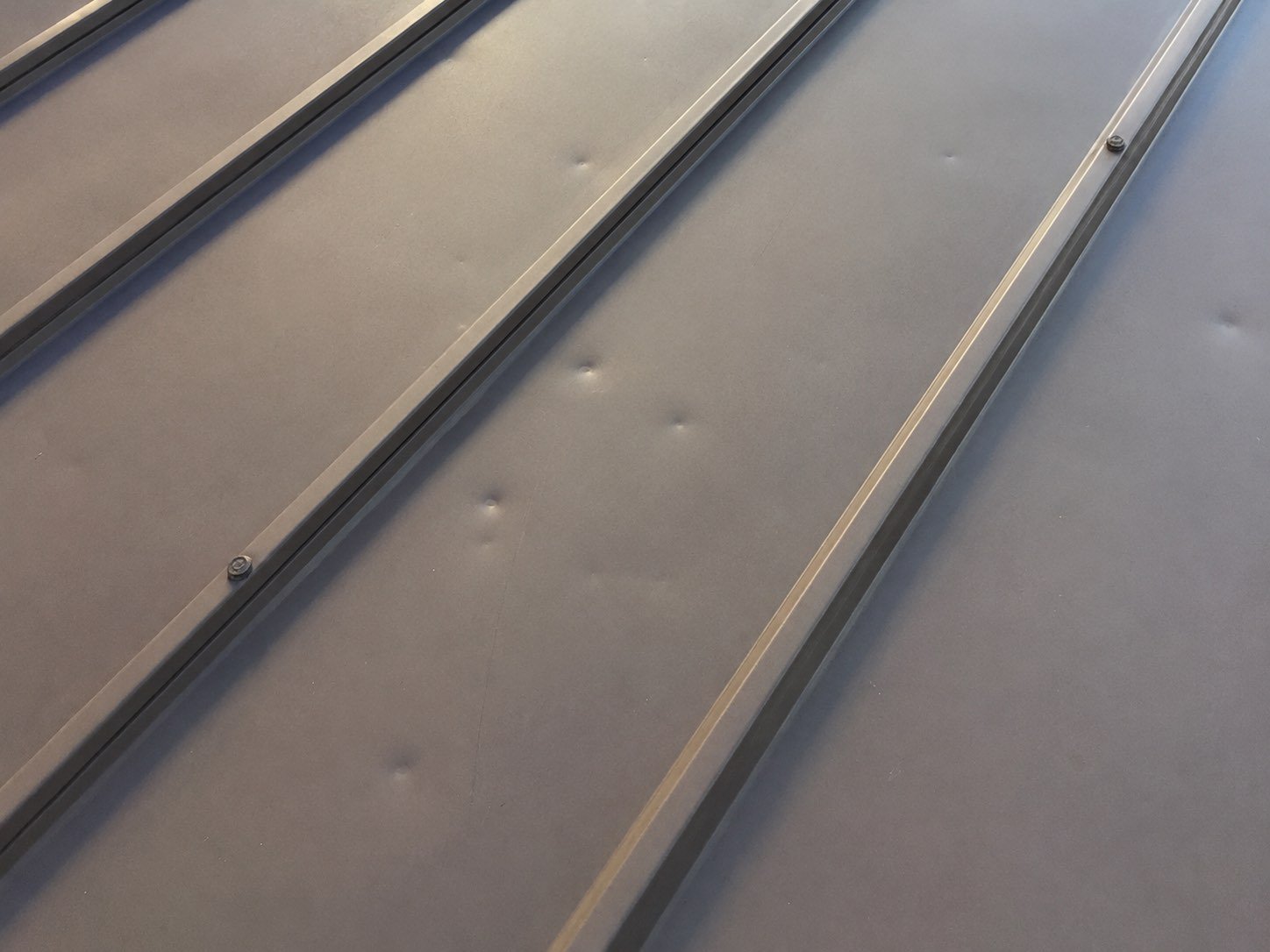
Severe hail can dent metal — but a dent is cosmetic. The roof still sheds water and still has decades left.
Valley homes, finished
What people ask about metal
This is the question we get most, and the answer surprises people: no. That sound you’re picturing comes from metal over open framing, like a barn or a carport. A residential metal roof sits on solid decking with underlayment, attic insulation, and a ceiling below it. Most homeowners say it’s about the same as shingle, and some find it quieter.
No. Lightning strikes the tallest object in an area regardless of what it’s made of. If anything, metal is safer — it’s non-combustible and disperses the energy of a strike rather than igniting the way wood or asphalt can.
The opposite. Painted metal roofing with a reflective finish bounces a significant portion of solar radiation away instead of absorbing it into the attic. In Valley summers that’s a real reduction in cooling load.
Severe hail can dent metal, yes. The important distinction is that a dent is cosmetic — the roof still keeps water out and still has decades of life left. When hail hits asphalt shingles it fractures the mat and knocks off the granules that protect them, which genuinely shortens the roof’s life.
It’s technically possible on some systems, but we don’t recommend it. Going over shingles means we can’t inspect or repair the decking underneath, and any rot or moisture down there is now permanently sealed in. We tear off first, every time.
Often, yes. Many Texas carriers offer discounts for impact-resistant and Class 4 rated roofing, and metal frequently qualifies. The amount varies a lot by carrier, so call yours before you decide.
Straight answers, solid work
The same thing keeps coming up in our reviews: we showed up, we told the truth, and we did what we said we’d do.
Not sure what your roof needs?
We’ll climb up, take photos, and give you a straight answer — repair, replace, or leave it alone. No cost, no obligation, no hard sell.