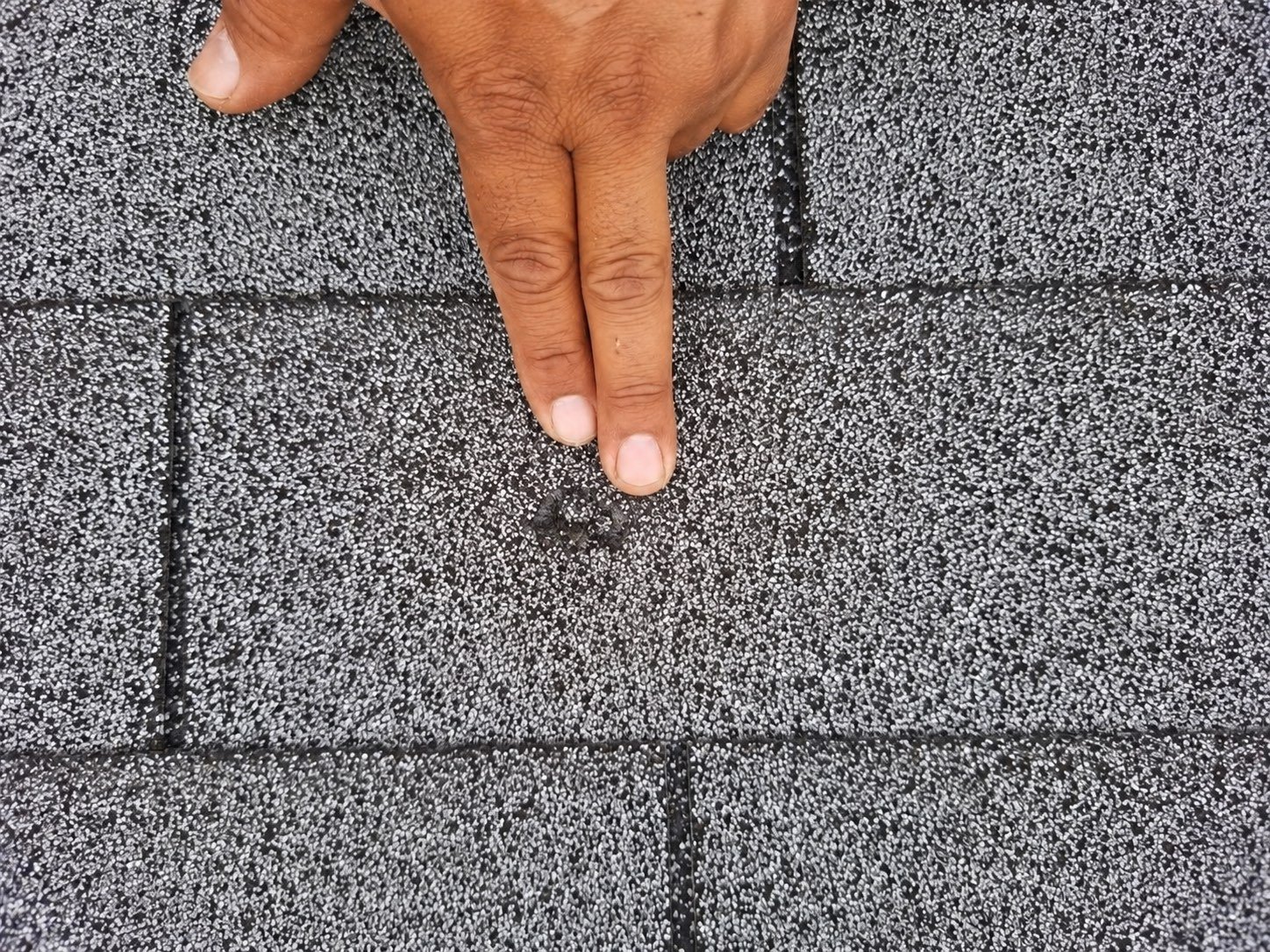
Hail hit. We’ll meet your adjuster on the roof.
Most denied claims aren’t denied because there’s no damage. They’re denied because nobody documented it properly. That part is our job.
Free Inspections
Photos and a written assessment, no charge
Licensed & Insured
Fully licensed, bonded, and insured
Financing Available
Flexible payment plans on approved credit
Workmanship Warranty
Our labor is guaranteed in writing
You usually can’t see it from the ground
Homeowners often assume that if the roof isn’t leaking, the storm didn’t hurt it. Hail damage doesn’t work that way — it shortens the roof’s life long before it lets water in.
- Dark circular bruises on shingles where granules were knocked loose
- Granules collecting in gutters, downspouts, and at splash blocks
- Dented soft metal — vents, gutters, flashing, A/C fins, mailboxes
- Cracked or split shingles, especially along the edges
- Exposed black fiberglass mat under the granule surface
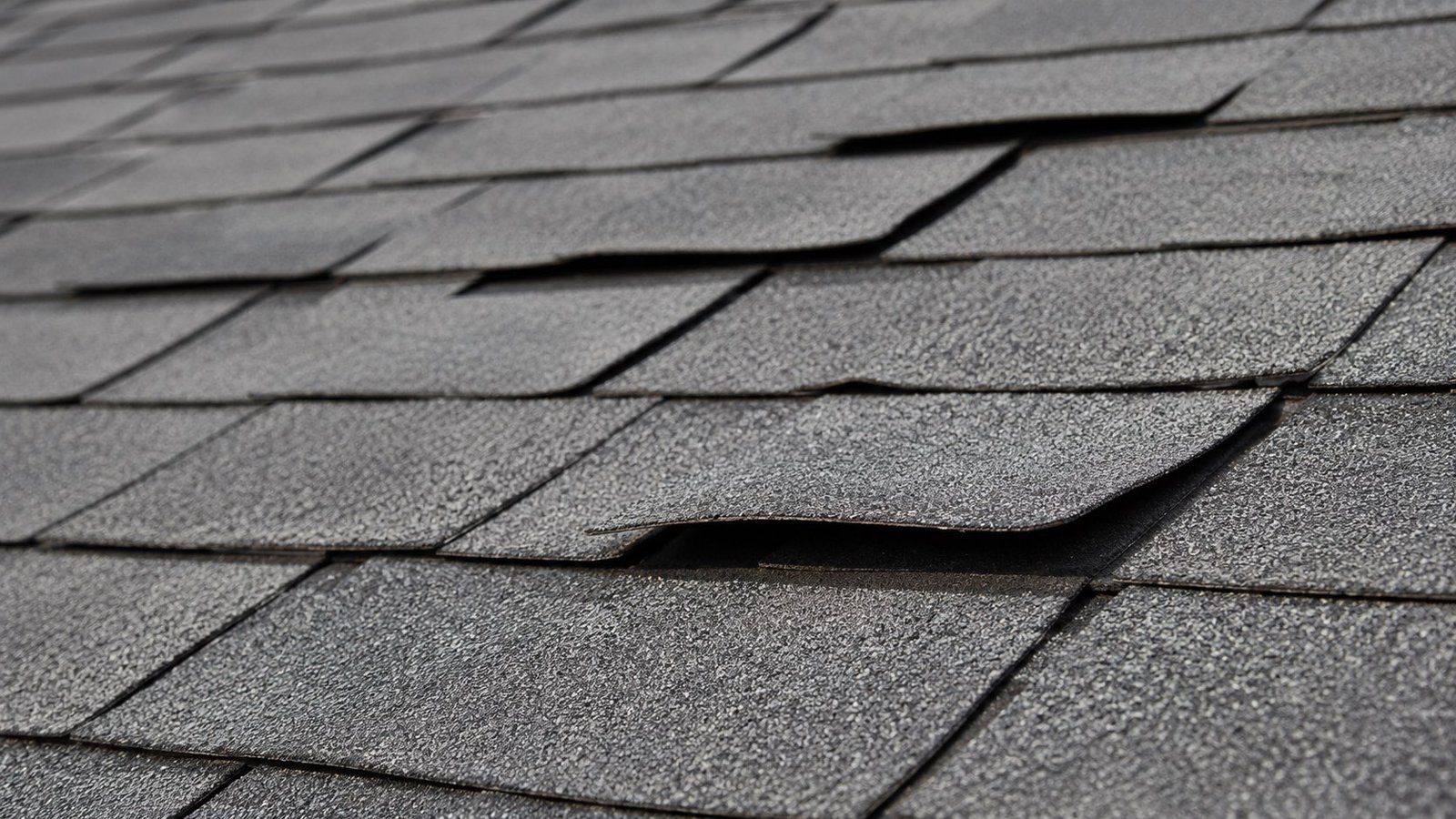
- Creased or lifted shingles from wind uplift
- Dents in your fence caps, garage door, or window screens
Texas gives you a limited window to file
Most policies require you to report storm damage within a set period after the event, and the clock starts at the storm date — not the date you noticed. If hail came through your area recently, get it inspected now even if nothing is leaking.
Wind-lifted and curling shingles — another form of storm damage we document.
Five steps, and we’re with you for all of them
You handle one phone call to your insurer. We handle the roof side.
Free inspection
We document every damaged area with dated photos and measurements before you call anyone.
You file
You call your carrier and open the claim. We give you the storm date, damage summary, and photos to reference.
Adjuster meeting
We meet your adjuster on the roof and walk the damage with them, point by point, so nothing gets missed.
Scope & supplements
If the approved scope misses items, we file supplements with documentation until the scope matches reality.
We build it
Approved work gets done to code and to manufacturer spec. You pay your deductible. That’s it.
What insurance pays for — and what it doesn’t
Understanding this before you file saves a lot of frustration.
Typically covered
- Hail damage from a specific storm event
- Wind damage and blown-off shingles
- Fallen tree or debris impact
- Sudden accidental water intrusion from storm damage
- Damaged gutters, vents, and flashing
Typically not covered
- Normal wear, age, and deterioration
- Damage from deferred maintenance
- Pre-existing damage from an earlier storm you never filed on
- Cosmetic-only damage, under some policies
- Damage excluded by a wind or hail exclusion in your policy
How your deductible actually works
Your deductible is the portion you pay out of pocket. On a covered claim, the insurance company pays the approved cost of repairs minus that amount.
Texas policies commonly use a percentage-based deductible on wind and hail rather than a flat dollar figure — often 1% or 2% of your dwelling coverage. On a home insured for $300,000, a 2% deductible is $6,000, not the $1,000 many homeowners assume. Check your declarations page before you file.
A warning about “we’ll waive your deductible”
If a contractor offers to absorb, waive, or “eat” your deductible, walk away. It is insurance fraud under Texas law, it exposes you personally, and it tells you exactly what kind of operation you’re dealing with. We will never make that offer.
What we will do is give you a straight assessment of whether the damage is likely to exceed your deductible at all — because if it isn’t, filing a claim gains you nothing and stays on your record.
About the trucks that show up after a storm
Every time hail comes through the Valley, out-of-state crews follow it in. Some are fine. Many are not, and homeowners here get burned every single season.
Here’s what to watch for, whether you hire us or not:
- Pressure to sign immediately. A legitimate contractor will leave you an estimate and let you think about it.
- Offers to cover your deductible. Illegal in Texas. It also means they’re padding the claim to make the numbers work.
- Large deposits up front. Be extremely cautious about handing over significant money before materials are on site.
- No local address or license verification. Ask. If they can’t produce insurance certificates, that’s your answer.
- A contract that assigns your claim to them. Read anything before signing.
- Vague warranties. “Lifetime warranty” means nothing if the company dissolves and leaves the state after the season.
The simplest protection: hire local
A company that lives and works in the Valley year-round has to answer for its work here next year, and the year after. That accountability is the whole point.
What homeowners ask after a storm
Compare the cost of the damage to your deductible. If repairs cost less than your deductible, filing gains you nothing and puts a claim on your record. If storm damage is widespread and clearly exceeds it, filing usually makes sense.
Weather-related claims are generally treated differently from liability claims, because they’re not tied to anything you did. That said, rate practices vary by carrier and multiple claims in a short window can affect renewal. Your agent is the right person to ask.
Not necessarily. Denials frequently come down to insufficient documentation or an adjuster who missed damage during a quick inspection. We can re-inspect, produce a detailed report, and support a request for reinspection or a supplement.
It depends on your policy, and the window is often shorter than people expect. The clock generally starts at the date of the storm, not the date you noticed damage.
No. Free, with photos and a written summary, whether you file a claim or not and whether you hire us or not.
For active water intrusion, usually yes — emergency tarping is often same-day. Most policies also require you to take reasonable steps to prevent further damage, so a documented emergency tarp helps your claim as well as your ceiling.
Straight answers, solid work
The same thing keeps coming up in our reviews: we showed up, we told the truth, and we did what we said we’d do.
Not sure what your roof needs?
We’ll climb up, take photos, and give you a straight answer — repair, replace, or leave it alone. No cost, no obligation, no hard sell.